Mihailo Mirkovic

Dr. Mihailo Mirkovic
Senior Lecturer
mihailo.mirkovic@universityofgalway.ie
Welcome Trust Career Development Award
Research interests
- Mitosis
- Chromosome Instability
- Introns
- Aneuploidy
- Adaptation through aneuploidy
Research Techniques
- Microscopy
- Genome editing
- Yeast genetics
- Genome-wide screens
Research overview
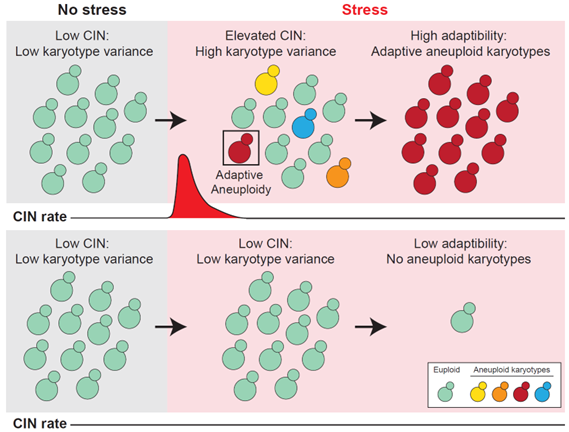
We study how fungi exploit Chromosome Instability (CIN) to adapt to stress. Mistakes during mitosis result in CIN and unbalanced, aneuploid karyotypes. In most contexts, aneuploidy lowers cell fitness. However, in fungi, CIN and aneuploidy can be beneficial during stress. Aneuploid karyotypes can survive diverse stress conditions, from elevated temperatures to antifungal treatment, pointing to CIN as a driver of adaptation. Intriguingly, the rate of CIN is elevated in stress, opening the possibility that cells have pathways to destabilize their genomes and accelerate adaptation.
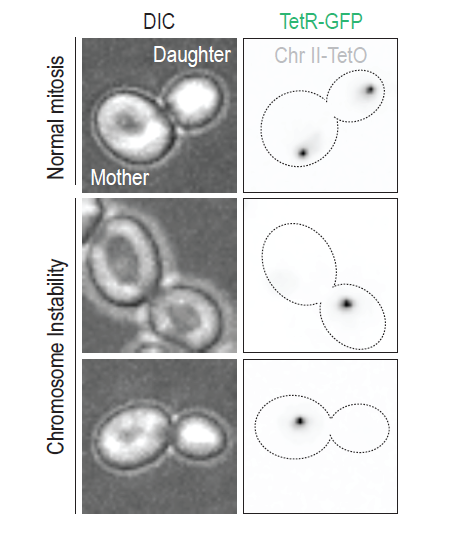
Using Saccharomyces cerevisiae and Candida albicans, we will tackle the following questions:
How do cells sense stress and how does this translate into CIN?
Stress results in drastic alteration of pre-mRNA is processing, affecting the function of intron-containing genes. Our previous work has shown that altered pre-mRNA processing and the presence of introns contribute to CIN in ageing. We will explore the role of pre-mRNA processing and introns as drivers of CIN in stress.
Which features of the genome drive elevated CIN?
While the plasticity of fungal genomes during stress is well documented, the drivers are poorly understood. Using the power of genome-wide screens in fungi, we will discover the drivers of CIN in different stress conditions.
Is instability a feature, rather than a bug?
Discovering pathways responsible for CIN in stress allows us to directly test its role in adaptation, by manipulating CIN rates. If instability is required for adaptation, elevated CIN could be a stress response, rather than a “mistake”.
Lab Members
- Gayathri Sivasailam (PhD)
- Holly Hughes (PhD)
- Rhea Kujawa (RA)
Keywords
Mitosis; Introns; RNA processing; Adaptation; Chromosome Instability; Yeast; Antifungal resistance; Aneuploidy

Selected Publications
- Dissociation of the nuclear basket triggers chromosome loss in aging yeast
- DNA circles promote yeast ageing in part through stimulating the reorganization of nuclear pore complexes
- Induced aneuploidy in neural stem cells triggers a delayed stress response and impairs adult life span in flies
- Absence of the Spindle Assembly Checkpoint Restores Mitotic Fidelity upon Loss of Sister Chromatid Cohesion
Most Recent Publications
Quick Links
Get in Touch!
mihailo.mirkovic@universityofgalway.ie